
From the founder of Biography Studio
The biggest moments of your life are paradoxically the hardest to write about.
The night you held your first child for the first time. The morning you said yes to someone. The day you walked out of a job, or a marriage, or a country. The afternoon you got news you had been waiting for. The morning a parent died. The phone call that came on a Tuesday and changed the direction of everything that followed.
The instinct, when sitting down to write about one of these, is to tell the listener it mattered. To declare its weight. To explain, near the beginning, that this was the moment when everything shifted, so they understand the importance of what is coming.
This almost always flattens it.
A moment that mattered does not need to be announced. It needs to be brought back. The listener should arrive at its weight by living through it with you, not by being told in advance that weight is on its way. The same craft that brings a person or a place to life on the page is what brings a moment back into a room. Specific detail. Anchored sensory texture. The discipline of constraint. And one further habit, particular to writing about moments: the refusal to underline.
This is the third practical piece in a short series applying the principles set out in How to Tell Stories So People Hang on Every Word, to specific kinds of memory. The previous pieces covered people and places. This one is about moments.
Find the smaller moment inside the bigger one
The first move is the same as the people and places pieces. Zoom in.
“The day my first child was born” is not a unit of memory. It is a long sequence of micro-moments, hundreds of them, stretching from morning to night. The first contraction at three in the morning. The bag you had packed weeks before. The drive to the hospital with no other cars on the road. The corridor. The midwife with a wedding ring on a chain around her neck. The hour you spent walking up and down a small room. The first cry.
Inside the big moment, there is a smaller one. The smaller it is, the more it will carry. The instant in the corridor when you saw the clock and realised how long you had been there. The look on a stranger’s face in the hospital lift. The minute when you suddenly noticed how cold your hands were. The silence after the first cry, before anyone spoke.
These small moments do not feel like “the moment.” They feel like ordinary fragments inside an extraordinary day. That is what makes them powerful on the page. They are how the day felt while it was happening, before you knew what to call it.
The same principle applies to harder moments. The day a parent died is rarely the best way in. The morning the phone rang at six, before anyone had said anything, often is.
Anchor in what your body was doing
The second move is to ground the moment in your physical self at the time.
The listener does not believe a moment until they feel where you were in your skin when it landed. Were you sitting or standing? Were you holding something? Were you halfway through doing something else? What were you wearing? What did the light look like?
I was making toast. I was halfway through tying my shoelaces. I was on a train pulling out of Reading. I was standing at the sink with both hands in dishwater. These openings ground the moment before the moment lands. They tell the listener that this happened to a body, in a place, at a particular hour.
This matters more than people expect. The biggest news of our lives always finds us in the middle of something small. The toast burning while the phone rings. The dog needing to be let out while the diagnosis is being read aloud. The contrast between the size of the news and the size of what your body was doing is part of what makes the moment feel true. It is also what makes it feel like a life rather than a film.
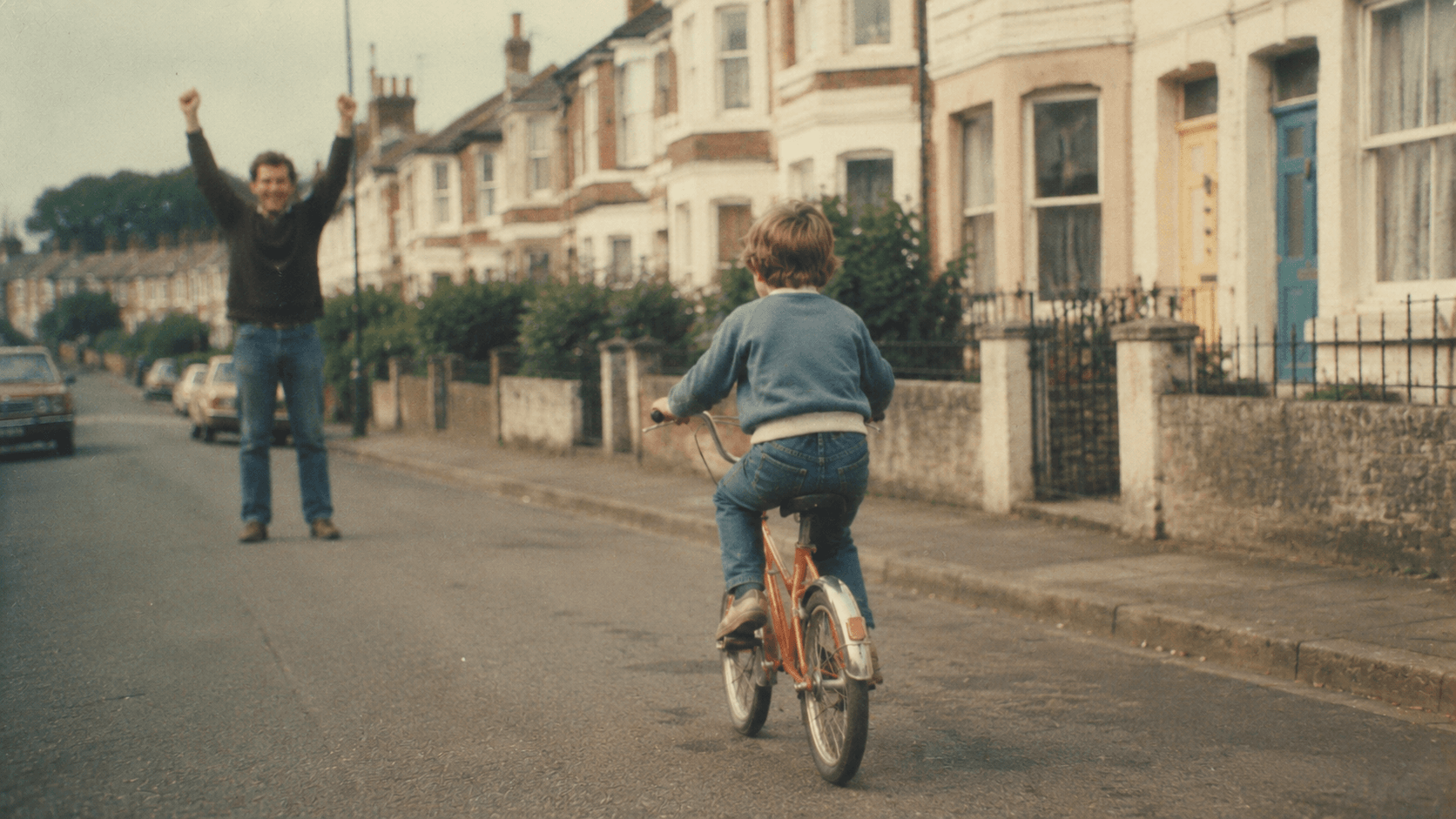
Memory does not work the same way on every moment. Some come back in full sensory detail. The first time you rode your bike without falling off, you might remember everything: the He-Man T-shirt you had on, the orange Raleigh Budgie underneath you, the specific bend in the road where the wheels stopped wobbling. Others come back differently. You might remember almost nothing about the bike or what you were wearing, but you remember the front door of the house was red, because you saw it every day for years.
Both are workable. If the moment itself comes back in vivid specifics, use them. If it does not, borrow from what you know about the place and the time that surrounded it. I cycled down the road towards our red front door. The red front door is not from that specific afternoon. It is from a thousand afternoons. But it sits in the same world as the moment, and it grounds the listener in a way that summary cannot.
The principle is not to manufacture detail you do not remember. It is to use the detail you do, even if it has to come from the surrounding place or time rather than the moment itself.
Do not underline the weight
The third move is the hardest. It is the discipline of not telling the listener that this is the moment.
The temptation is to telegraph. To write, near the beginning, that this was when everything changed. To use phrases like little did I know, what I did not realise then, this would turn out to be the day. These phrases are craft warning signs. They are the writer announcing significance because they do not trust the scene to carry it.
Tobias Wolff, in his memoir This Boy’s Life, handled critical moments by refusing to telegraph them. A turning point in his childhood often arrives mid-paragraph, mid-conversation, in a sentence that does not call attention to itself. The listener registers the shift after the fact, often a paragraph later, the way the shift would have registered in the moment itself. That delay is part of what makes the writing land.
Trust the scene. Trust the silence. The listener does not need to be told what to feel. They need the specifics that allow them to feel it for themselves. If you have done the first two moves well, found the smaller moment, anchored it in the body, the weight is already in the writing. You do not need to underline it. Underlining only signals to the listener that the writer was not sure the scene was strong enough to stand on its own.
The same applies to the meaning of the moment. You do not need to explain, in the same paragraph, what the moment came to mean over the years that followed. That can come later, in a different sentence, in a different chapter, or never. The moment first. The meaning second, if at all.
End where the moment ends
The fourth move is to stop at the right point.
The instinct, after writing a moment well, is to keep going. To tell the listener what happened next. To draw the lesson. To explain the significance for the years afterwards. The temptation here is the same as the temptation to telegraph at the start. A lack of trust in the moment to carry itself.
The strongest endings stop. They give the moment, they trust the listener, and they leave. Often the best last sentence is the last specific detail before the realisation hits. The cup of tea that went cold on the table. The phone you put down without remembering doing it. The car you drove home in with the radio on, even though you could not have said what was playing.
That kind of ending leaves the listener inside the moment with you. Anything else lifts them out of it.
The test
Read what you have written and ask one question. Have you told the listener how to feel about this moment? If the answer is yes, find a way to cut that, and let the detail carry the weight instead.
It was the saddest day of my life. The listener has been told what to feel. I sat in the kitchen for an hour with the heating off. My feet went numb. I did not notice. The listener feels it.
This was the moment that changed everything. The listener has been told what to think. I put the phone down. I made another cup of tea. I let it go cold. The listener understands without being told.
The detail does the carrying. The writer steps out of the way.
When you have many moments to describe
If you are working through a Biography Studio project, you will be asked about many of them. The first time you fell in love. The day you knew you needed to leave. The morning your first child was born. The afternoon you made a decision you have never quite told anyone about. The conversation you wish you had had with your father before he died.
Each one is its own piece of work. Each one deserves the same care. You do not need to package every moment into a unified life-narrative. The architecture of the framework gives each one its own place. The day of the diagnosis goes in the chapter on health. The night you left home goes in the chapter on early adulthood. The afternoon you read the letter that changed your mind about something important might go anywhere: in a chapter on a relationship, on a place, on a turning point. There is room for all of them.
The same is true when there is no framework. The conversation you are having tonight does not need to cover every moment that mattered. The one you choose to tell about, told well, is enough.
What this is for
The moments that mattered to you are how you became yourself. The afternoon you decided. The morning you understood. The night you could not sleep because something had shifted. When you write about one of these properly, what you are doing is letting someone else stand inside the moment with you. The listener feels a weight they did not know they were going to carry. They understand something about you that you might never have said directly.
This is one of the things life writing does best. A photograph cannot do this. A summary cannot do this. The small specific moment, brought back with the right details, is the closest thing we have to handing someone a piece of our own experience.
The series ends here. Three pieces have applied the principles from the pillar to specific kinds of memory: people, places, and moments. Read them in any order, return to them in any order. The habits in them get easier with use.
Biography Studio guides you through your life story across thirteen chapters, in your own words, at your own pace. The framework is built. The questions are ready. All that remains is to find a quiet half hour and begin.
How do I write about a moment and give it meaning?
Find the smallest version of it. The day your first child was born is not a unit of memory; the silence after the first cry, before anyone spoke, is. Anchor in the smallest, most specific version, and trust it to carry the larger weight.
Should I explain why a moment mattered to me?
Usually not in the same paragraph. The meaning can come later, in a different sentence or a different chapter, or not at all. The moment itself, told well, will often communicate the meaning without you having to declare it.
What if I can’t remember the specifics?
Begin with what you do remember and let the rest follow. A single detail will often surface others alongside it. The smell, the sound, the thing you were holding, the colour of something nearby. The brain stores more than ordinary recall can reach, and one specific cue is often enough to unlock the rest.