
From the founder of Biography Studio
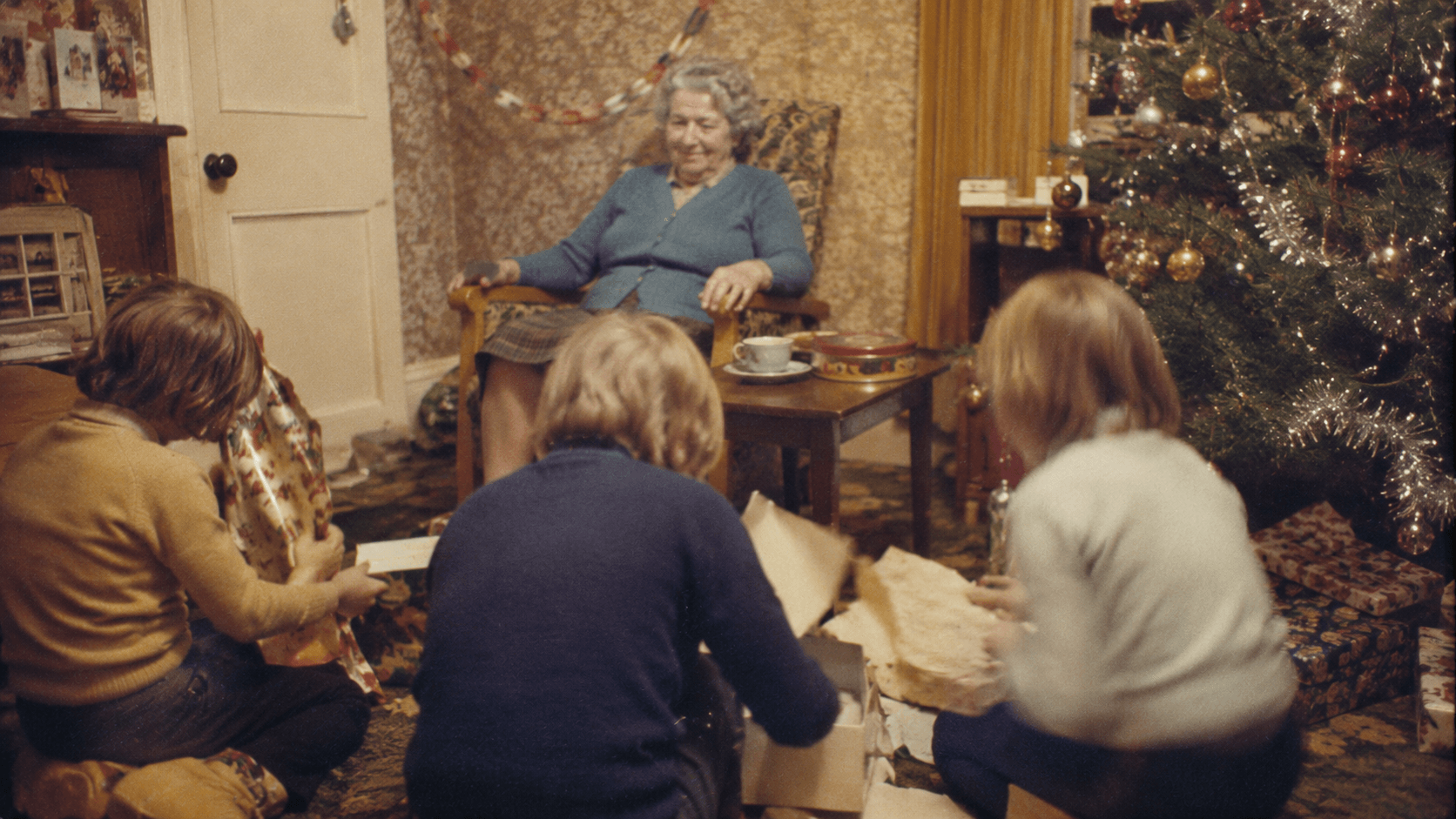
A child you love has asked, looking at an old photograph, who the woman in it is. Your mother. Your grandmother. Someone who shaped you, gone before this child was born. They wait for an answer.
The instinct is to say something like oh, she was so lovely. So warm and friendly. It comes from a kind place. But the child will sit there politely, get a vague feeling of what she was like, and never quite manage to build a picture of her. The words you have reached for are the ones anyone might use about their grandmother. None of them belongs only to yours.
Most people, when asked to describe someone they loved, reach for those words first. Whether it is a eulogy, a passage in a memoir, an answer in a Biography Studio chapter, or a conversation at a dinner table, the instinct is the same. We try to summarise. We try to be fair to a whole person at once. And in doing so, we hand the listener a feeling about her rather than the woman herself.
This piece is about how to do it differently. How to bring someone who mattered to you into a room where the other people did not know them, in such a way that they leave feeling they did. It is the first practical piece in a short series applying the principles set out in How to Tell Stories So People Hang on Every Word, to specific kinds of memory. This one is about people.
The recurring gesture
A person becomes themselves through repetition. The thing they did every morning, every Sunday, every time they came in from outside. The habit so consistent that the people closest to them stopped noticing it, until it was gone. These small repeated actions hold more of a person than any list of qualities can.
Mary Karr, who has written three memoirs and a book on the craft of writing them, makes the case that people in memoir come alive through the specific way they hold their bodies. The gestures. The voice. The particular way they move through a room. Not what they were like in general, but how they were like that, in this kitchen, on this morning, in front of this person.
The thing your mother did every time she answered the phone. The way your grandfather sharpened a pencil before writing a letter. The phrase your aunt said when she sat down at the end of a long day. These are the marks of someone specific, because they are what no one else did in quite that way.
When you sit down to describe someone, do not reach for adjectives. Sift through your memories of them instead. Try to picture them physically, doing something specific. The way they sat. The way they held a cup. The phrase they always said when the doorbell went. He always tested the temperature of his tea against his upper lip before drinking it. That sentence puts a man in a room. The listener has met him.
Something else happens when you do this. The act of searching your memory for a specific gesture, an object, a recurring habit, returns more of the person to you than you knew you still had. The summary version of someone is held lightly in the mind. The specific details are stored deeper, and reaching for them brings them up. The people closest to us become more present to us, not less, in the act of describing them properly. Finding the right detail is also finding the person again.
The How Memory Works piece goes into why specific cues unlock layers of detail that ordinary reflection cannot reach. The same principle works in reverse when you set out to describe someone. The specifics come up carrying the rest with them.
The specific object
People are also carried by the objects they used. The mug only she drank from. The chair only he sat in. The handbag and the particular set of things inside it. The book on the bedside table. The hammer or the rolling pin or the fountain pen that lived in the same drawer for forty years.
These objects matter because they carry the person’s life with them. The wear pattern on the handle. The smell of the leather. The way the cushion has shaped itself to her body over the years. Describe one well and you have described a great deal of how she lived.
This is also why, after someone dies, the small everyday objects often hit hardest. The half-used jar of jam in the fridge. The reading glasses left on the side table. The objects do not stand for the person abstractly. They are the residue of an actual life, evidence of the small daily choices that made up who she was.
In writing or speaking, an object can carry weight that adjectives cannot. Her handbag was a small leather affair, the strap repaired twice with brown thread, and inside it she carried a fold of tissue paper containing two boiled sweets in case anyone needed cheering up. You now know things about that woman that a paragraph of summary could not have told you.
The single scene
The instinct, when asked what your grandmother was like, is to compress a thousand encounters into a generalised account. She would always do X. She would never do Y. She had a way of doing Z. The result is a kind of average grandmother, true in outline, untrue in particular.
The richer answer is to find one occasion you can actually return to. The afternoon she taught you to make pastry. The moment she stood up at a wedding and gave a speech no one expected. The phone call when she told you something you had never heard her say before. A single scene has a beginning, a middle, an end. It has weather, light, other people present, the specific things she said and the specific things she did.
The scene does not have to be momentous. The smallest occasions often carry the most. The Tuesday she got her own joke wrong and laughed for ten minutes anyway. The morning she missed the bus and walked into town in the rain rather than wait. Specific, irretrievable, hers.
You can compress many afternoons into a sentence to give context. She came every Sunday for as long as I lived in that house. Then drop into one of them. The compression sets the scene. The single afternoon is what brings her in.
Let the contradictions stand
The flattest portraits are the ones that tidy a person up.
People are not consistent. Your mother was generous and she could be cutting. Your grandfather was gentle, and there were times he was difficult to be around. The aunt who took the room at Christmas was also someone who held grudges for years. The instinct, when describing them, is to choose the side that does them justice and play it straight. The result is a saint or a villain, neither of which captures her.
The truer move is to put both in the same scene. She would tell off the dog and slip it a biscuit in the same minute. He could be tender with the children and impatient with the adults in the same hour. The contradiction is not a flaw in the portrait. It is the portrait. The listener recognises someone they could believe in the moment they see them being two things at once, because that is how people are.
This also frees you, as the teller, from the burden of producing a clean tribute. You are not building a statue. You are bringing back a person. People are interesting. Statues are not.
The test
Before you commit a description of someone to a page or to a conversation, run it through one filter. If the sentence you have just written could be said about anyone else’s mother, anyone else’s grandfather, anyone else’s friend, it is not yet doing its job. Find the detail that belongs only to them.
Kind. Could be anyone. Always packed an extra sandwich in case someone else had forgotten theirs. Belongs to one woman.
Hard-working. Could be anyone. Was at his desk every morning by six, with a thermos of coffee and a small notebook he kept his ideas in. Belongs to one man.
She made the best Sunday roast. Could be many grandmothers. She used to test the gravy by dipping her little finger in and tasting it, every single time, and every single time she would say the same thing under her breath about whether it was right. Belongs only to her.
That is what you are looking for. The detail that belonged only to her.
When you have a whole life to fill
If you are working through a Biography Studio project, the people you loved will not appear once. They will appear many times. Your mother in Foundations, in the chapters on your teenage years, in the questions on the people who shaped you, in the moments that turned out to matter, in the chapter on what you wish you had said.
This is a gift. It means that each appearance does not have to do everything. The mother in Foundations is the mother you knew when you were six. The mother in the chapter on adulthood is the woman you came to know once you had grown up. The mother in the final chapter is the one you understand now, looking back. Use the architecture. Let each portrait of her be specific to the moment you are writing about, and trust the framework to give you the whole woman over time, one true detail at a time.
The same is true when there is no framework. There will be other conversations. There will be other dinners. There will be other letters. The portrait you draw today does not have to be the only one. Let it be a particular one, true to the version of her you remember in a particular moment, and trust that the next telling will catch another facet.
What this is for
The people we have loved are difficult to put into words, partly because there is so much to say about them. Describing them well comes down to choosing one true detail over twenty general ones, and trusting the detail to carry the weight.
When you do it well, something happens. The person comes into the room. Whoever is listening, or reading, meets someone they did not meet before. And you, in finding the right detail, get to spend a little more time in their company.
The series continues with two further pieces. How to write about a place you remember. How to write about a moment that mattered. They sit alongside this one as practical companions to the principles set out in the pillar piece.
Biography Studio guides you through your life story across thirteen chapters, in your own words, at your own pace. The framework is built. The questions are ready. All that remains is to find a quiet half hour and begin.
How do I describe someone without making them sound generic?
Find the things only they did. The recurring gesture, the specific object, the contradiction, the single occasion. If a sentence about them could be said about anyone else’s mother or grandfather, replace it with one that belongs only to them.
Should I focus on what someone looked like?
Less than you might think. Physical description matters less than how the person moved, what they said, what they did, and what they kept around them. A photograph can show what someone looked like. Writing or speaking about them is the chance to capture the things a photograph cannot.
How do I write about someone without trying to cover their whole life in one go?
You don’t have to. Pick one moment, one scene, one specific thing they did, and let it carry one part of who they were. The whole portrait emerges across many small true descriptions, not from one big one.